Reflecting on the Boomtown of Thurmond
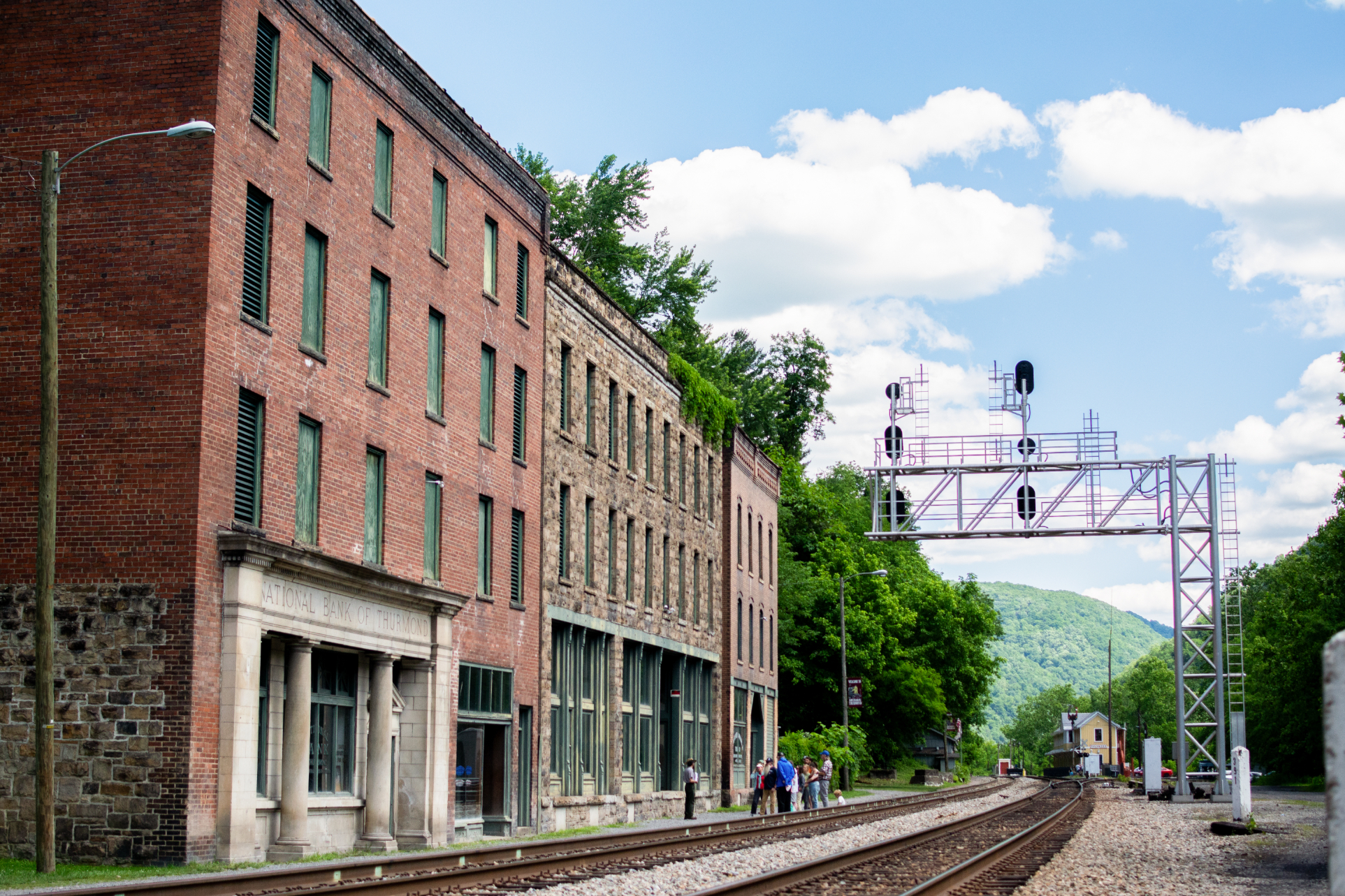
A drive to Thurmond, West Virginia, is a drive on winding, narrow roads that branch out miles from the busy highway. With each turn, those unfamiliar with the area might wonder where they are and where they are going. But as the road follows Dunloup Creek, the mystery fades as park signs direct wandering motorists to cross a one-lane bridge that is shared with a railroad to Thurmond’s Historic District.
While many sites claim Thurmond to be a ghost town, people still live here. It has a few permanent residents, and that population increases every tourist season when the New River Gorge National Park and Preserve need to house seasonal staff.
The main draw to the district is the restored train depot, which acts as a seasonal park visitor center, museum, and station for Amtrak’s Cardinal line. Park rangers lead tours down Commercial Row, a small series of buildings that are not structurally sound enough for visitors to enter. These buildings, with their mosaic stonework and decorative wallpaper seen through the windows, are an echo of what was once one of the most bustling places within the New River Gorge.

Photo credit: National Park Service
Coal trains still run through the New River Gorge, but 150 years ago, it was the ruling way to get from point A to point B. So, in 1873, when the Chesapeake and Ohio Railway finished its mainline, the lands and mountains of southern West Virginia opened up to the world. Recognizing an opportunity, Captain W.D. Thurmond bought 73 acres along the line and the New River.
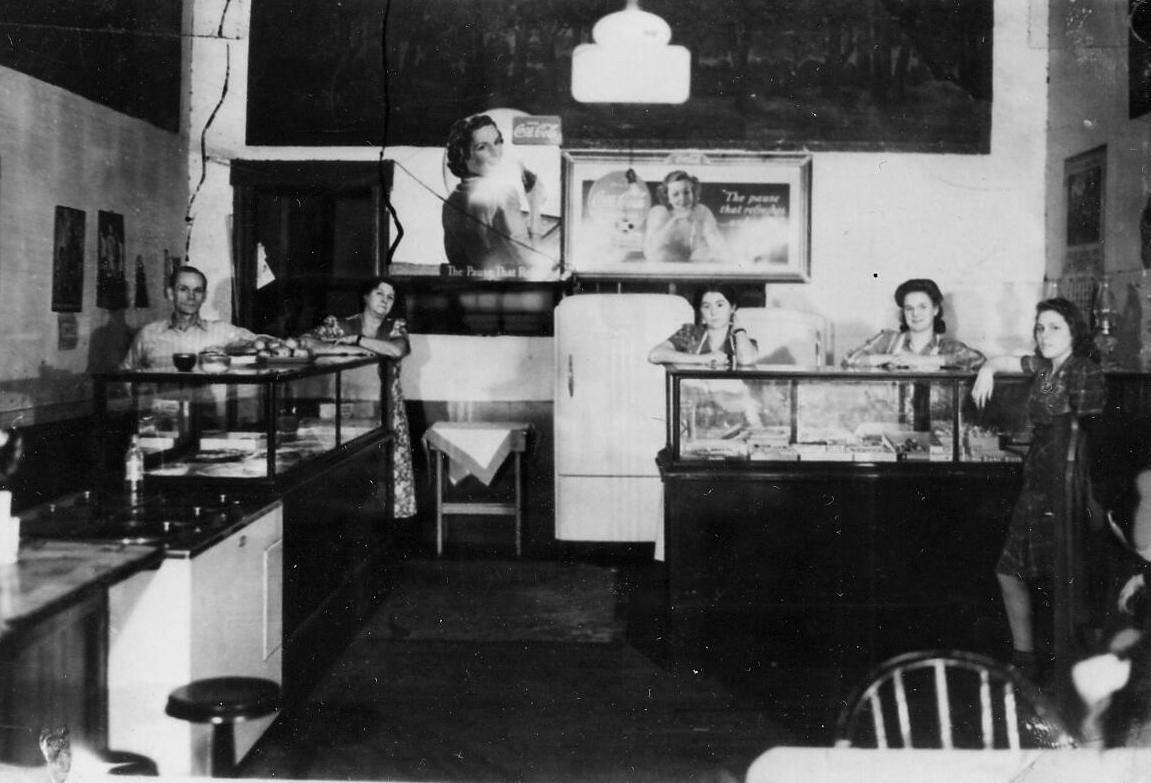
It wasn’t long before the town of Thurmond became the hottest spot in the New River Gorge. The town generated 20% of Chesapeake and Ohio’s revenue in 1910 when it was the main railroad center for the rail line. Thurmond hosted restaurants, banks, clothing stores, general stores, a movie theater, and more to accommodate the influx of visitors, workers, and residents.
Some of the town’s most famous structures, now gone, were two competing hotels. Just steps from the train tracks, the Lafayette Hotel boasted 35 rooms, seven bathrooms, steam heat, and electric lighting. Within its brick walls were several businesses, including a jewelry store. On the other side of the river was the famous four-and-a-half-story, 100-room Dunglen Hotel. While alcohol was prohibited from the main stretch of Thrumond, it flowed in the halls of the Dunglen as easily as the New River flows North. Rumors are that a poker game at the Dunglen lasted 14 years.
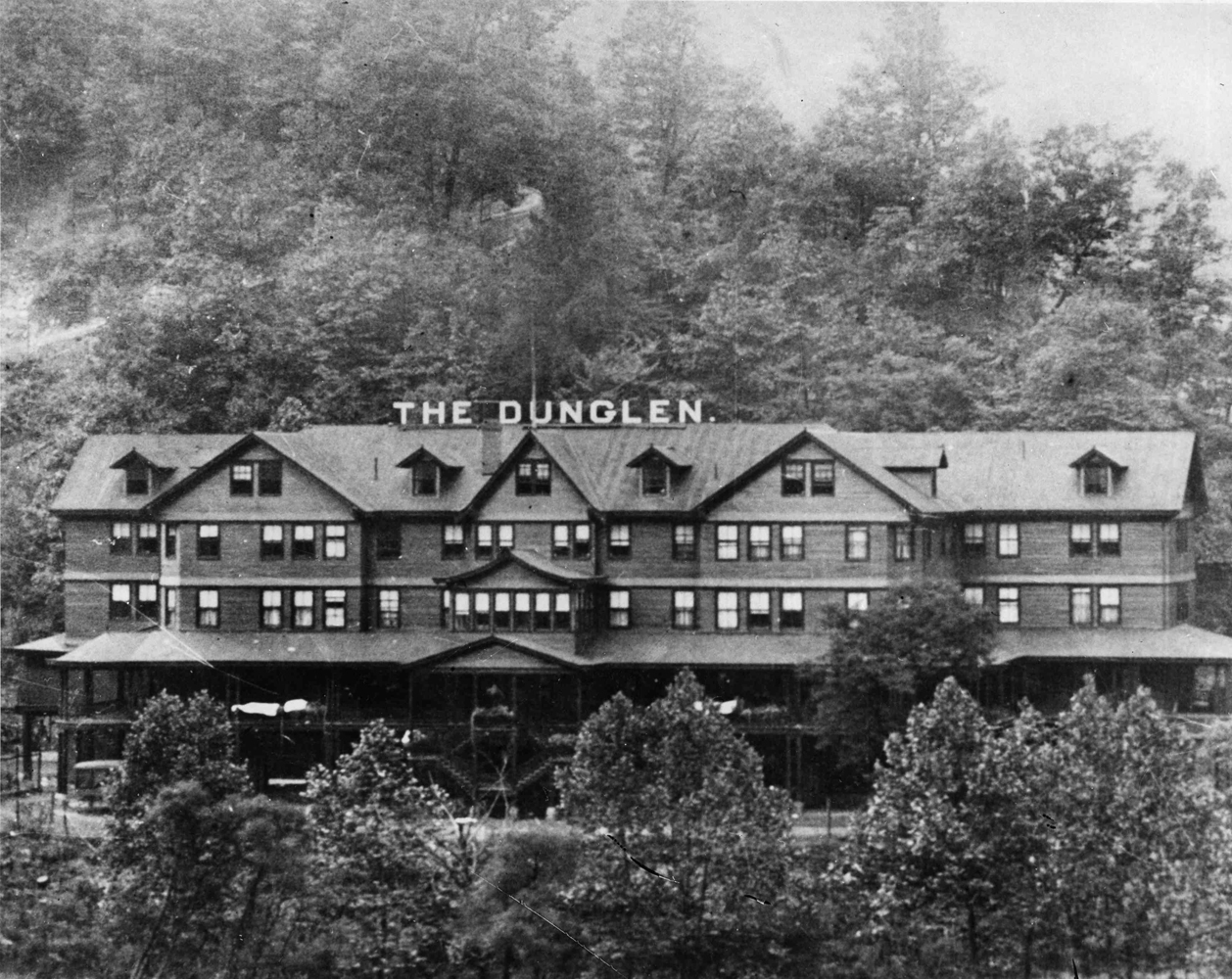
Photo Credit: National Park Service
Though the party couldn’t last forever. The onset of the Great Depression in 1929 caused businesses within the town of Thurmond to shutter. Then came the fire, which destroyed the Dunglen Hotel on July 22, 1930. With the town already on the decline, there was no point in rebuilding it.
The main reason for Thurmond’s existence was the railway. The town acted as a service station for steam engines, which carried coal and passengers through West Virginia and the New River Gorge. As time crept into the mid-20th century, technology advanced. Cars surpassed trains as the main mode of transportation. While coal still needed to be carried out of the mountains of West Virginia, the steam engines that were powered by that very stone were phased out as diesel arrived on the scene. Diesel engines were cheaper to run and required less maintenance. Less maintenance for trains meant fewer people stopping in town and dwindling customer bases for Thurmond’s businesses.
In 1963, the Lafayette Hotel burned to the ground, with just its back wall remaining. This wall is still visible on a walk down Commercial Row. While many of the buildings are gone, the memories that were made here are vibrant in the minds of the people who lived in Thurmond. As one of the few towns in the New River Gorge that still has structures to visit, Thurmond is a popular hub for reunions of former residents. Also, since the town is incorporated, there is a mayor and an active city council.
While only a few permanent residents are remaining, people are visiting now more than ever before. In 2024, 1.8 million people visited the New River Gorge National Park and Preserve. With this visitation and interest from visitors, there is an increased importance in caring for this community. You can help keep Thurmond clean and accessible by disposing of trash in the proper containers, staying off the railroad tracks, staying on the street of Commercial Row, and only going into the New River to go whitewater rafting. This increase in tourism is also an opportunity for Thurmond to grow. As time unfolds, we are excited to see how this small, staple town of the New River Gorge develops in the future.
If you lived in Thurmond, West Virginia, and would like to help the National Park Service preserve the history of the New River Gorge, schedule an oral history interview by emailing NERI_Oral_History@nps.gov or by calling the Canyon Rim Visitor Center at 304-465-2636.
Want to see more from our team? Save our blog as a preferred source in Google